

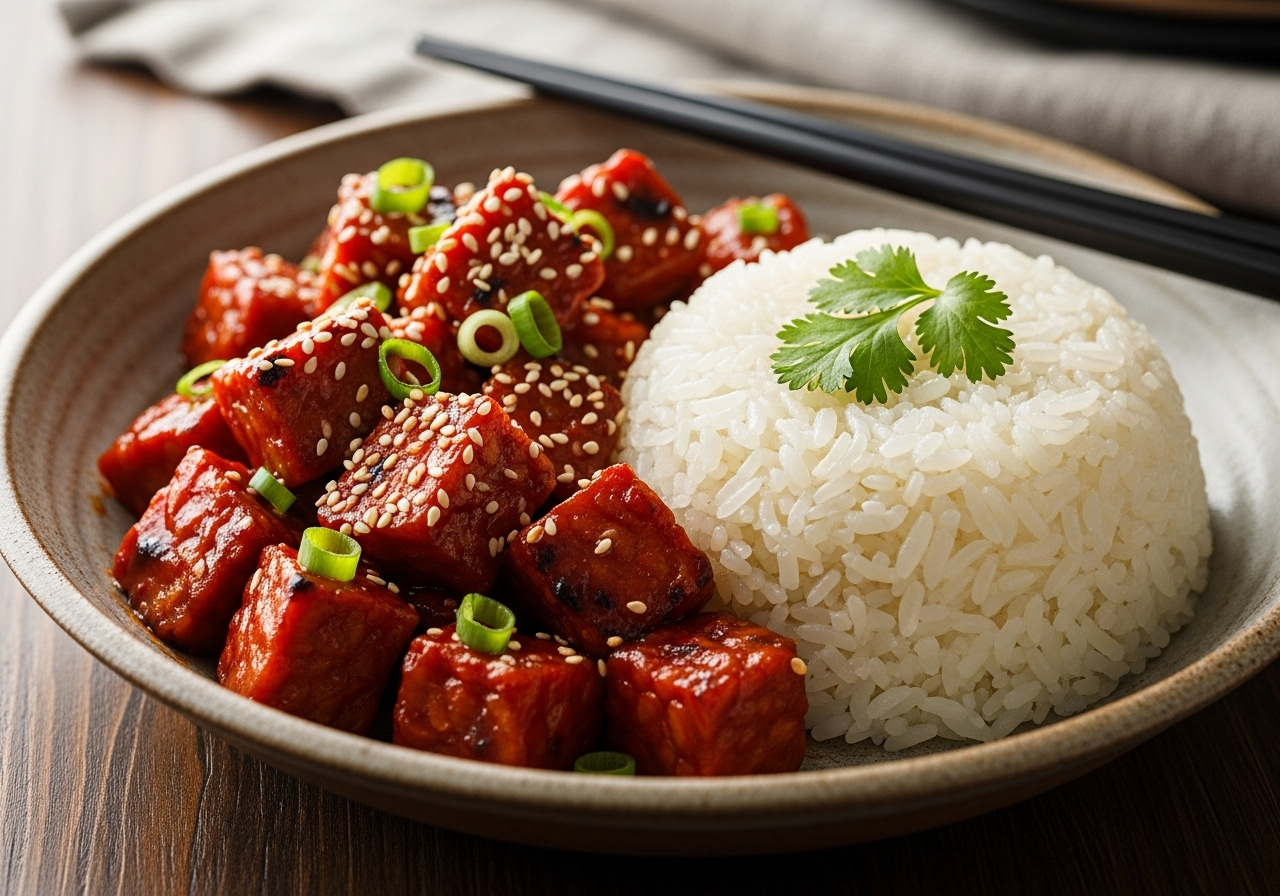
Imagine a dish that bursts with bold, smoky heat, balancing deep umami flavors and a subtle touch of sweetness-this is the fiery allure of gochujang tempeh. Paired with the comforting, tender embrace of perfectly cooked sticky rice, this harmonious duo transforms simple ingredients into an unforgettable culinary experiance. In this article, we’ll explore how the spicy, fermented Korean chili paste elevates nutty tempeh into a vibrant, plant-based star, while sticky rice acts as the ideal canvas, soaking up every flavorful drop. Whether you’re a seasoned foodie or new to Korean-inspired cuisine, discover how to master this dynamic pairing, blending tradition and innovation on your plate.
Fiery Gochujang Tempeh Paired with Perfect Sticky Rice
Fiery Gochujang Tempeh paired with perfect sticky rice is a sublime fusion of heat and umami that transforms simple ingredients into an irresistible feast. Inspired by Korean street food culture yet adapted for approachable home cooking, this dish brings together the smoky depth of fermented soybeans with the tangy, spicy richness of gochujang. Each bite bursts with sticky, caramelized tempeh cubes clinging lovingly to a bed of fluffy, slightly chewy rice – a contrast that excites and comforts all at once.
Prep and Cook Time
- preparation: 15 minutes
- Cooking: 25 minutes
- Total: 40 minutes
Yield
Serves 4 generously
Difficulty Level
Easy to Medium – perfect for adventurous beginners and seasoned cooks looking for bold flavors.
Ingredients
- For the Fiery Gochujang Tempeh:
- 400g (14 oz) tempeh, cut into 1-inch cubes
- 2 tbsp sesame oil
- 3 tbsp gochujang (Korean chili paste)
- 2 tbsp soy sauce (low sodium preferred)
- 1 tbsp maple syrup or agave nectar
- 2 garlic cloves, minced
- 1 tsp grated fresh ginger
- 1 tsp rice vinegar
- 1 tsp toasted sesame seeds
- For the Perfect Sticky Rice:
- 2 cups glutinous (sweet) rice, rinsed thoroughly
- 2 ½ cups water
- Pinch of salt
- Garnishes & Extras:
- Thinly sliced green onions
- Fresh cilantro leaves
- additional toasted sesame seeds
- Optional: julienned cucumber or pickled radish for freshness
The Art of Mastering Sticky Rice
Sticky rice requires some love and patience to achieve its ideal texture. Begin by thoroughly rinsing the rice until the water runs clear to remove excess starch. Soaking for at least 30 minutes lends the grains their distinctive tenderness. use a heavy-bottom pot with a tight-fitting lid to prevent steam escape during cooking. Bring the water and rice to a boil, then reduce to the lowest simmer, allowing it to gently steam for 15-18 minutes without lifting the lid.
Step-by-Step Instructions
- Prepare the Sticky Rice: Rinse and soak the glutinous rice for 30 minutes. drain and transfer to a medium saucepan. Add 2½ cups of water and a pinch of salt.
- Bring rice to a boil over medium-high heat.Once boiling,reduce heat to low,cover tightly,and simmer for 15-18 minutes. Remove from heat and let stand, covered, for 10 minutes to allow steam to finish cooking the rice perfectly.
- Make the Fiery Gochujang Sauce: In a small bowl, whisk together gochujang, soy sauce, maple syrup, minced garlic, grated ginger, and rice vinegar until smooth. Set aside.
- Cook the Tempeh: Heat sesame oil in a large non-stick skillet over medium heat. Add tempeh cubes in a single layer and sauté until golden and crispy on all sides,about 8-10 minutes,turning regularly to ensure even browning.
- Pour the prepared gochujang sauce over the tempeh and toss gently to coat. Cook for an additional 3-5 minutes, stirring frequently, until the sauce reduces to a sticky glaze that clings beautifully to each cube.
- Sprinkle toasted sesame seeds over the tempeh and toss briefly to combine.
- Plate and Garnish: Fluff the sticky rice with a fork and mound generously on serving plates. Top with the fiery gochujang tempeh and garnish with green onions,cilantro,and optional fresh veggies to balance the heat.
Tips for Success
- Variations: substitute tempeh for extra-firm tofu for a different texture but keep the same cooking technique for equally rich flavor.
- Make-Ahead: The gochujang sauce can be mixed up to two days in advance and refrigerated. Warm before adding to the tempeh.
- Sticky Rice alternatives: If you cannot find glutinous rice, short-grain sushi rice is a good stand-in; just rinse thoroughly and adjust water slightly.
- Preventing Tempeh Stickiness: Avoid overcrowding the pan to ensure each piece crisps rather of steaming.
- boost Umami: Add a splash of mushroom soy sauce or a teaspoon of miso paste into the sauce for deeper complexity.
Serving Suggestions
This dish shines when served with crisp, fresh elements that contrast the bold tempeh and dense sticky rice. Pair with speedy pickled radish for a tangy crunch or a simple cucumber salad with rice vinegar and sesame oil for brightness. Offering chili oil or extra gochujang on the side allows guests to customize heat levels. For a feast-worthy presentation, serve in individual bowls layered with sticky rice, a generous portion of gochujang tempeh, and vibrant garnishes to wake up the senses.
| Nutrition (per serving) | Amount |
|---|---|
| Calories | 380 kcal |
| Protein | 18g |
| Carbohydrates | 52g |
| Fat | 10g |
For an adventurous expansion on this theme, explore more Korean-inspired plant-based recipes. To deepen your understanding of gochujang’s cultural meaning and health benefits, see this detailed guide by Korean Bapsang.
Q&A
Q&A: Fiery gochujang Tempeh Paired with Perfect Sticky Rice
Q1: What is gochujang, and why is it perfect for tempeh?
A1: Gochujang is a traditional Korean fermented red chili paste, known for its spicy, sweet, and umami-rich flavor profile. When paired with tempeh, its bold heat and depth bring out the nutty, earthy qualities of the tempeh, creating a harmonious balance that excites the palate without overpowering the plant-based protein.
Q2: How do you prepare tempeh to soak up the gochujang sauce effectively?
A2: To get maximum flavor absorption, it’s best to steam or simmer the tempeh briefly first.This softens its texture and opens up its pores. Then, marinating it in a mixture of gochujang, garlic, ginger, and a touch of sweetener lets the tempeh soak up those fiery, tangy flavors before a quick pan-fry seals the deal with a crispy exterior.
Q3: What makes sticky rice the ideal accompaniment for this spicy tempeh dish?
A3: Sticky rice’s tender, glutinous texture acts as the perfect canvas to mellow the intensity of the gochujang tempeh. Its subtle sweetness and velvety mouthfeel offer a cooling counterbalance that complements the fiery sauce, allowing each bite to be both satisfying and nuanced.
Q4: Are there any tips for cooking sticky rice so it turns out perfectly every time?
A4: Absolutely! Soak the sticky rice for at least 3-4 hours before cooking to ensure softness. When ready, steam the rice rather than boil it to maintain its characteristic chewiness and fluffiness. Using a bamboo steamer lined with cheesecloth or a clean kitchen towel helps achieve that ideal sticky texture without excess moisture.
Q5: Can gochujang tempeh be customized for different heat levels?
A5: Definitely! The great thing about gochujang is its versatility. To dial down the heat, mix the gochujang with a bit more sweetener like honey or maple syrup and add some sesame oil for richness.For those who love an extra kick, couple it with fresh chili slices or a dash of chili flakes to crank up the fire.
Q6: What are some simple garnishes to elevate this dish visually and flavor-wise?
A6: Shining garnishes like thinly sliced scallions, toasted sesame seeds, and fresh cilantro add layers of freshness and crunch. A drizzle of toasted sesame oil just before serving also imparts a fragrant nuttiness that ties all the flavors together beautifully.
Q7: Is this dish suitable for a plant-based diet?
A7: Absolutely! Both tempeh and sticky rice are plant-based staples, and gochujang, being traditionally made from fermented soybeans, rice, and chili, contains no animal products. This combination makes for a satisfying, flavorful meal that pleases vegans and vegetarians alike.
Q8: What beverages pair well with fiery gochujang tempeh and sticky rice?
A8: While avoiding wine or alcohol, opt for cooling drinks like chilled coconut water, lightly sweetened iced green tea, or a crisp cucumber-mint agua fresca. These beverages refresh the palate and offer a gentle counterpoint to the heat of the dish.
This Q&A provides an insightful and flavorful look at creating and enjoying Fiery Gochujang Tempeh with Perfect Sticky Rice,blending culinary technique with delectable inspiration.
In Summary
As the last bite of fiery gochujang tempeh melts away, accompanied by the comforting embrace of perfectly steamed sticky rice, you’re left with a symphony of flavors that dance on your palate-bold, sweet, spicy, and satisfyingly umami. This dish isn’t just a meal; it’s an invitation to explore the vibrant crossroads of korean heat and Indonesian tradition, reimagined with plant-powered goodness. Whether you’re a seasoned foodie or a curious novice, pairing gochujang tempeh with sticky rice promises a culinary adventure that’s as nourishing as it is unforgettable. So go ahead, savor each bite, and let this dynamic duo spice up your kitchen repertoire with warmth and wonder.